

Independent · Published in Bangkok

Hiring help in Thailand, honestly explained.

We translate the labour law into the five languages this country actually speaks, compile salary ranges from sources we name, and introduce employers to vetted agencies for free. Workers never pay us. Employers never pay us. Read the methodology before you trust a word of it.

The Editors
The Editors
Editorial team · Bangkok
How we publish

An editorial process, not a listings page.

Every recommendation comes out of four steps. We tell you which ones we have completed for any agency you read about — and which ones we have not yet.

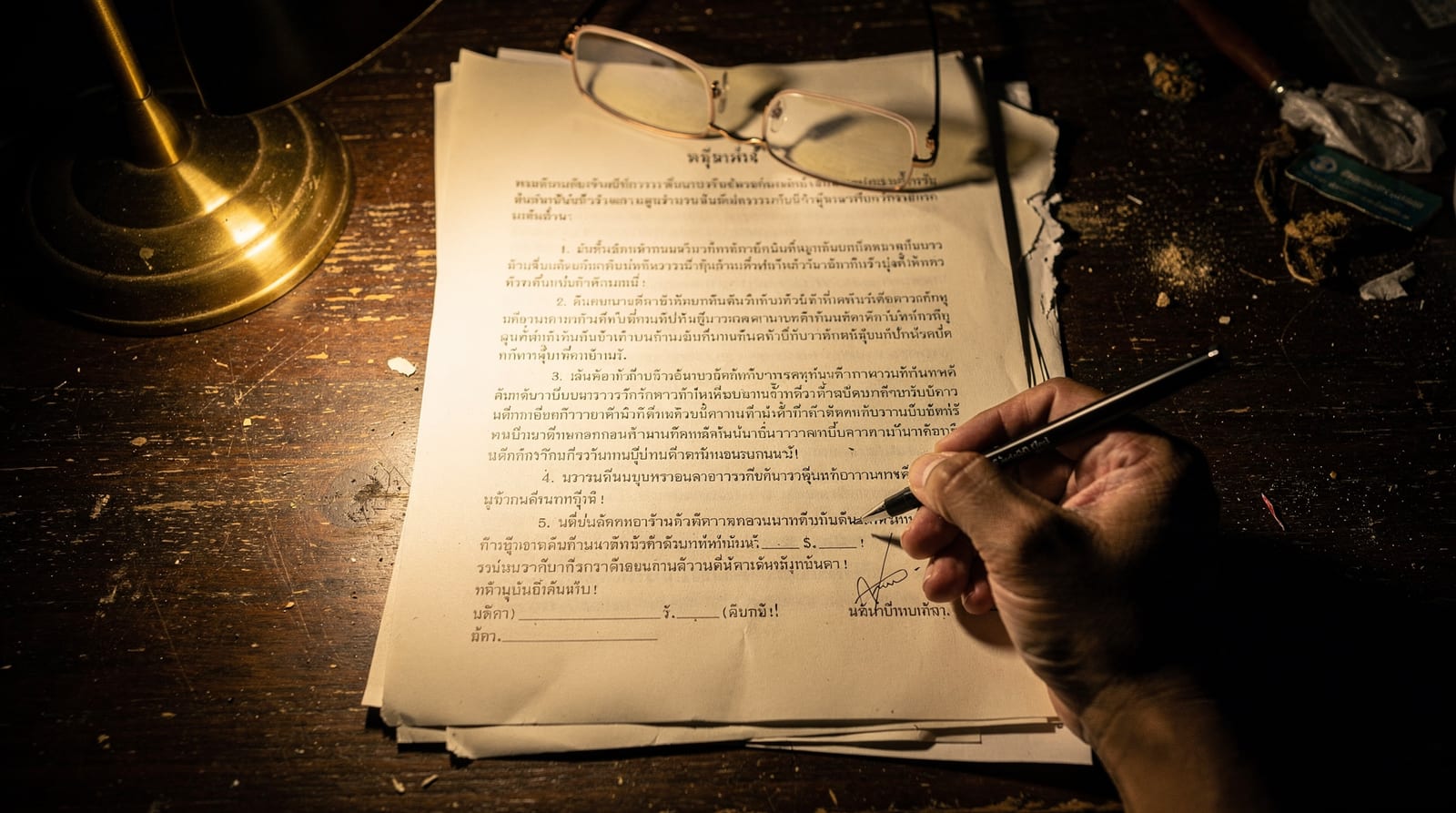
Editorial review of agency paperwork and ministry records against a Bangkok work desk.
  1. Mystery-shop the agency

    We contact agencies as a real employer and pay fees from our own pocket. We never accept a discount in exchange for coverage.

  2. Interview the workers

    We talk to current and former helpers in their first language, through an NGO-vetted translator where needed.

  3. Verify the paperwork

    We check work permits, MOU compliance, MR 15 contracts, and broker-fee disclosures against ministry records.

  4. Publish — and update

    We name our editor, date the article, list our sources, and refresh as the law changes. If we are wrong, we correct in public.

How we work
Start here

The guides every employer in Thailand should read first.

All guides in
Legal explainer

Ministerial Regulation No. 15 (B.E. 2567), explained

Ministerial Regulation No. 15 (B.E. 2567) took effect 30 April 2024 under the Labour Protection Act B.E. 2541. It brought Thailand's domestic workers under minimum wage, a written contract, paid sick leave, a weekly rest day and paid public holidays. It did not grant social security or full overtime and severance rights.

Read →


Legal explainer

Can a Filipino legally work as a maid in Thailand?

A Filipino cannot be lawfully hired by a private Thai household as a maid. Thailand admits domestic foreign labour only through MOUs with Myanmar, Laos, Cambodia and Vietnam, and the Philippines has none. The Philippine side also bans direct hiring of domestic workers. The common visa workarounds are illegal.

Read →
Legal explainer

The MOU process for Myanmar, Lao, Cambodian, and Vietnamese workers

The MOU channel is the only legal route to hire a Burmese, Lao, Cambodian or Vietnamese domestic worker in Thailand. It runs in five stages through the Department of Employment. An employer who deals directly pays about 3,700 to 4,200 baht per worker in official fees. By law the employer pays, not the worker.

Read →
Salary

Thailand domestic helper salary benchmark 2026

A benchmark of domestic helper pay in Thailand compiled from named public agency listings and expat guides, anchored to the statutory minimum wage. The legal floor is ฿400/day in Bangkok and top-tier provinces since 1 July 2025; market live-in maid pay runs ฿12,000–20,000/month. Last compiled June 2026.

Read →
Pillar

How to hire a maid in Thailand: the 2026 guide

Two facts decide a Thai maid hire: who you can legally employ (Thai needs no permit; foreign workers only via the MOU channel with Myanmar, Laos, Cambodia or Vietnam; a Filipino household maid is not lawful) and the two non-negotiable documents — an MR 15 contract and, for migrants, a work permit. Budget a live-in Bangkok maid at roughly 15,000–25,000 baht/month all-in.

Read →
Free service

Get matched with 1–3 vetted agencies

Free · A personal email from a named editor within 24 hours

Get an intro
Salary benchmarks · 2026

What domestic helpers actually earn — with the sources shown.

We do not run a secret survey. We compile the published ranges from named agencies and expat resources, then anchor every figure to the legal floor: ฿400 a day in Bangkok since 1 July 2025, which Ministerial Regulation No. 15 now extends to domestic workers. Where a number is an estimate, we say so.

A Bangkok household ledger and banknotes, illustrating domestic-helper pay anchored to the legal minimum wage.
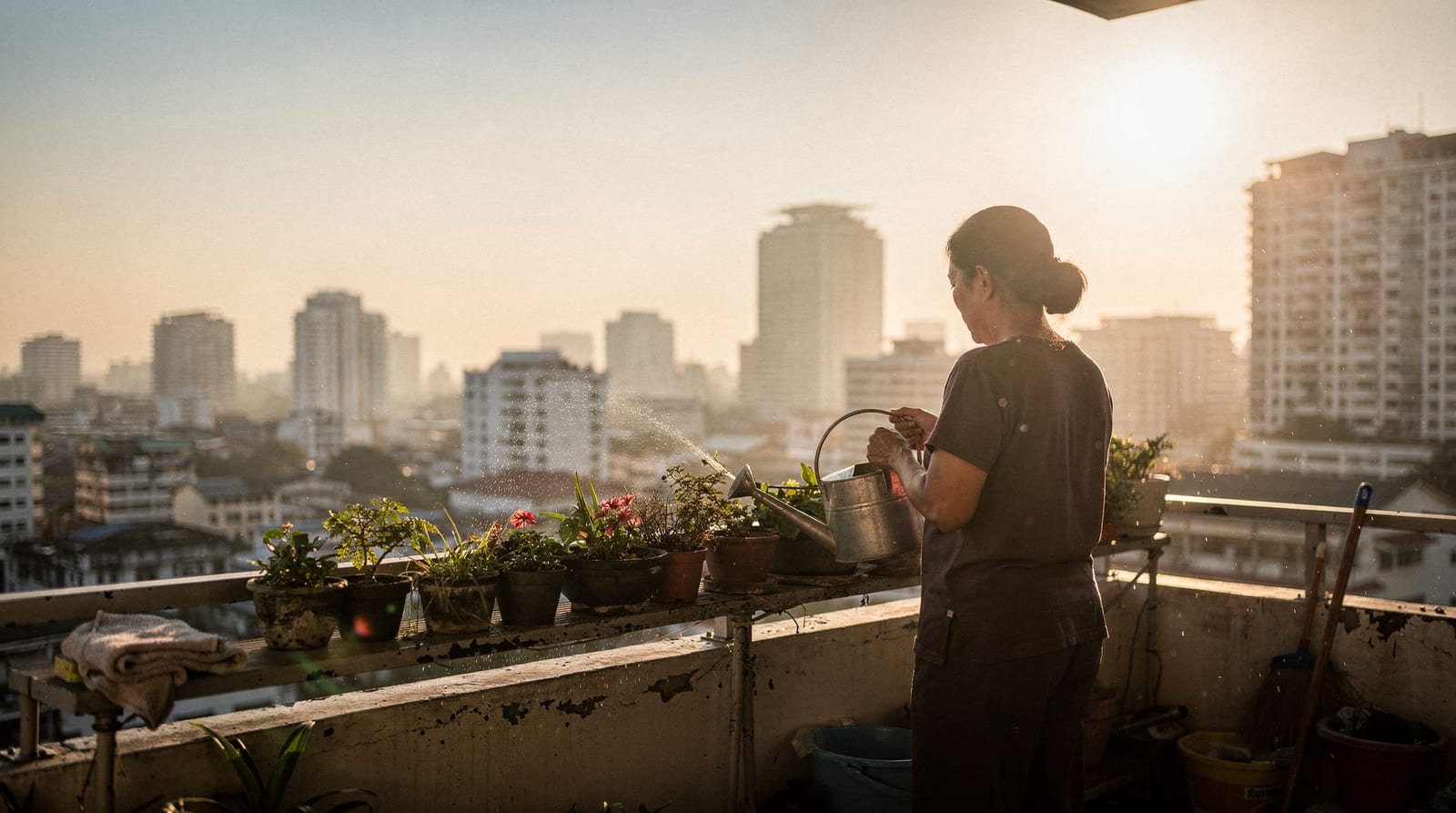
A domestic worker at home in Thailand, photographed with dignity and without an identifiable face.
For workers

Your rights, in your language.

Worker-rights guides, scam red-flag alerts, MOU step-by-steps, and an introducer to verified employers — in English, Thai, Burmese, Tagalog, and Lao. Workers never pay us and never will.

All guides in English