Live-in vs day maid in Bangkok — cost and the honest trade-offs
A day maid is cheaper to start and lighter on your home; a live-in maid costs more all-in once you add a private room, food and utilities, but buys far more availability. The legal floor is identical for both under MR 15 — one paid rest day, 13 paid holidays, paid leave, and the 400 baht/day Bangkok minimum wage.

The short answer.
- A day maid is cheaper to start and lighter on your home — you pay only for hours worked, with no room to give up.
- A live-in maid costs more all-in once you add a private room, food, and utilities to the cash wage, but buys far more availability per baht.
- The legal floor is the same for both. One paid rest day a week, at least 13 paid public holidays, 6 paid annual-leave days after a year, up to 30 paid sick days, and the ฿400/day Bangkok minimum wage all apply to live-in and day workers since MR 15.
- Day suits a condo and a predictable schedule; live-in suits a larger home, children, or an elderly relative needing cover across the day.
- Salary figures here are estimates from public agency and expat listings, not a survey — treat them as ranges, not quotes.
This is the question almost every Bangkok household asks before its first hire, and most answers online skip the part that actually decides it: the legal obligations are identical, so the real choice is about space, money, and privacy, not paperwork. Below is the honest comparison, the law that binds you either way, and a verdict on who each arrangement suits.
First, the three arrangements
"Day maid" covers two patterns, and it helps to separate them from the live-in option:
- Part-time day maid. A few hours, a few days a week. Usually paid by the hour. Common for condos and smaller households.
- Full-time day maid (live-out). Works a full day, most days, then goes home each evening. Paid a monthly salary. The middle path between part-time and live-in.
- Live-in maid. Lives in your home in a dedicated room, available across the day, paid a monthly salary with food and lodging provided on top.
The cost and lifestyle gaps between these three are large. The legal gaps are not, which is where most first-time employers get caught out.
The honest comparison
| Live-in maid | Day maid (part-time / full-time live-out) | |
|---|---|---|
| Cost structure | Monthly salary plus a private room, food, and utilities. Public listings put the salary at roughly ฿12,000–฿20,000/month (estimate). The in-kind costs are real money you carry on top. | Part-time: roughly ฿150–฿300/hour (estimate). Full-time live-out: a monthly salary, with no room or food to provide. |
| Legal duties (MR 15) | One paid rest day/week, ≥13 paid public holidays/year, ≥6 paid annual-leave days after one year, up to 30 paid sick days/year, ฿400/day Bangkok minimum wage, written contract. No "live-in" exemption. | Identical floor. A part-timer's entitlements scale with hours and tenure, but the rest-day, holiday, leave and minimum-wage rules still apply. |
| Best for | Larger homes and villas; households with young children or an elderly relative; irregular or long hours; anyone needing evening and weekend cover. | Serviced condos; predictable daytime needs; households that value their privacy; a tighter or more variable budget. |
| Trade-offs | You give up a room and some household privacy. You carry food and utility costs. Boundaries on hours and rest matter more, because work and home share a roof. | No evening or overnight cover. Less continuity. Part-time hours can be harder to fill reliably. You may end up coordinating around the worker's other clients. |
Salary and hourly figures are estimates drawn from public Bangkok agency and expat listings (June 2026); they are not from a survey and vary with nationality, English level, and duties. Legal duties per Ministerial Regulation No. 15 (B.E. 2567), in force 30 April 2024, and the Bangkok minimum wage of ฿400/day in force since 1 July 2025.
The cost difference, honestly
The headline numbers mislead in both directions, so read them carefully.
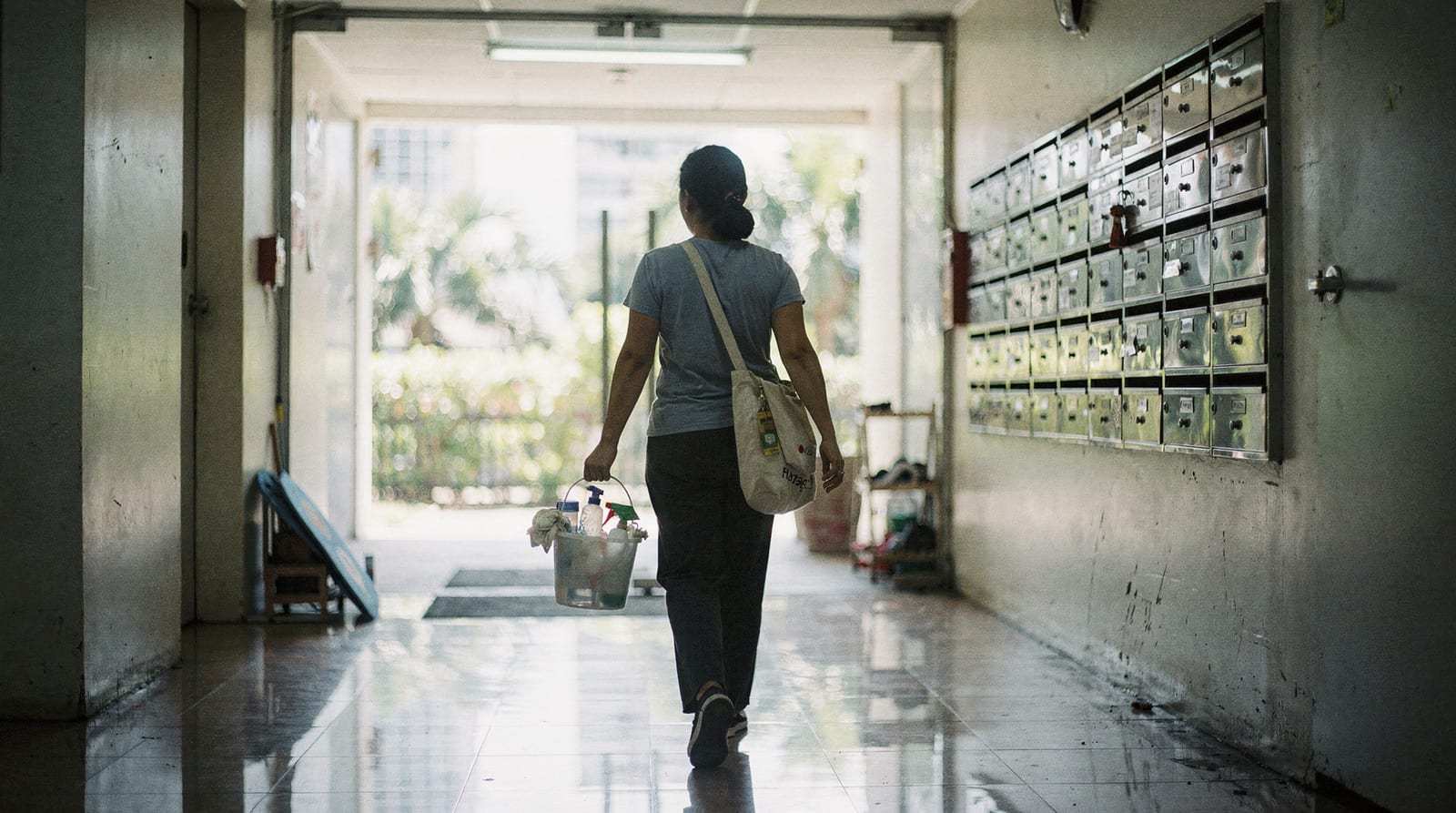
A day maid looks cheap because you only pay for hours. At an estimated ฿150–฿300 an hour, a part-timer doing three half-days a week is a modest monthly outlay, and you provide no room, no meals, and no utilities. That is genuinely the lowest-cost way to keep a home clean. The trade is that you get cover only when she is there.
A live-in maid looks expensive but buys availability. The salary alone, an estimated ฿12,000–฿20,000 a month from public listings, already covers far more hours than a part-timer. But the true cost is higher than the salary, because a live-in arrangement adds a private room, food, and a share of utilities. None of these can be subtracted from the wage (see the next section). So the honest way to budget a live-in maid is: cash wage at or above the minimum, plus the in-kind cost of housing and feeding another adult.
We label all of these as estimates deliberately. There is no published government survey of domestic-helper market salaries in Thailand, and roughly nine in ten in-home cleaners work informally, so the ranges above are triangulated from agency and expat listings — useful for planning, not precise quotes. For a fuller breakdown by role, nationality, and city, see the Thailand Domestic Helper Salary Atlas 2026.
The law applies to both — and it changed in 2024
This is the part that surprises most Bangkok employers, Thai and foreign alike. There is no longer a separate, lighter rulebook for domestic workers, and no exemption for live-in staff.
MR 15 is a ministerial regulation, a piece of subordinate legislation issued by the Minister of Labour under the Labour Protection Act B.E. 2541 (1998). Ministerial Regulation No. 15 (B.E. 2567) was published and took effect on 30 April 2024, replacing the older MR 14 of 2012. It extended core labour protections to people doing household work that is not part of a business: cleaners, cooks, carers, drivers, and household security guards. Full detail is in our MR 15 explainer.
What that means for you as an employer, whether your maid lives in or comes by day:
- Minimum wage now applies. Before MR 15, domestic workers were excluded from the statutory minimum. Since 30 April 2024 they are covered, at the provincial rate where they work. In Bangkok that is ฿400 per day, in force since 1 July 2025. See our Thailand minimum wage 2026 page for the full province table.
- At least one full paid rest day a week, with no more than six days between rest days.
- At least 13 paid public holidays a year, including National Labour Day on 1 May.
- At least 6 paid annual-leave days a year, available after one full continuous year of work.
- Up to 30 paid sick days a year; a medical certificate may be required for three or more consecutive days.
- A written contract and the standard termination terms — one wage-cycle notice, final pay within three days of the last working day.
None of these carry a "live-in" exception. If anything, a live-in arrangement makes the rest day and the working-hour boundaries harder to honour, because the worker is always physically present. That is a management problem to plan for, not a legal loophole.
You cannot charge a live-in maid for her room and board
This is the single most common mistake in live-in arrangements, so it gets its own section. The cash wage must meet the provincial minimum on its own. You cannot pay below ฿400/day in Bangkok and call the difference "room and food."
MR 15 permits wage deductions only in five narrow categories — provident fund, income tax, debts that benefit the worker, damage from a wilful act or gross negligence, and union dues — each capped at 10% of salary and 20% in total per payment. Accommodation and meals are not on that list. So the correct way to think about a live-in maid's housing and food is as a cost you carry on top of a full, lawful wage, never as a deduction from it.
Live-in: the accommodation and food questions to settle first
Before you choose live-in, be honest about whether your home can support it:
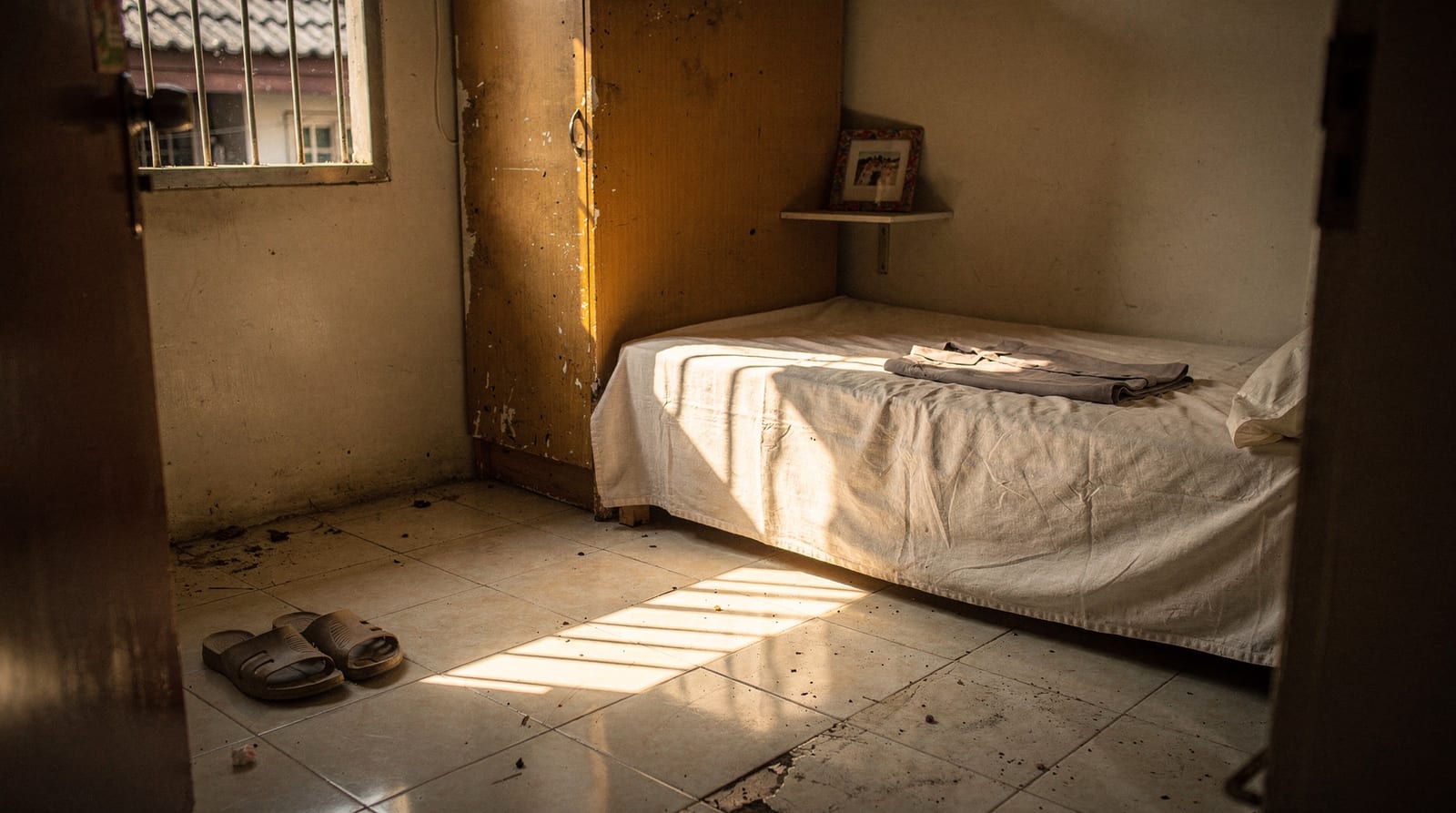
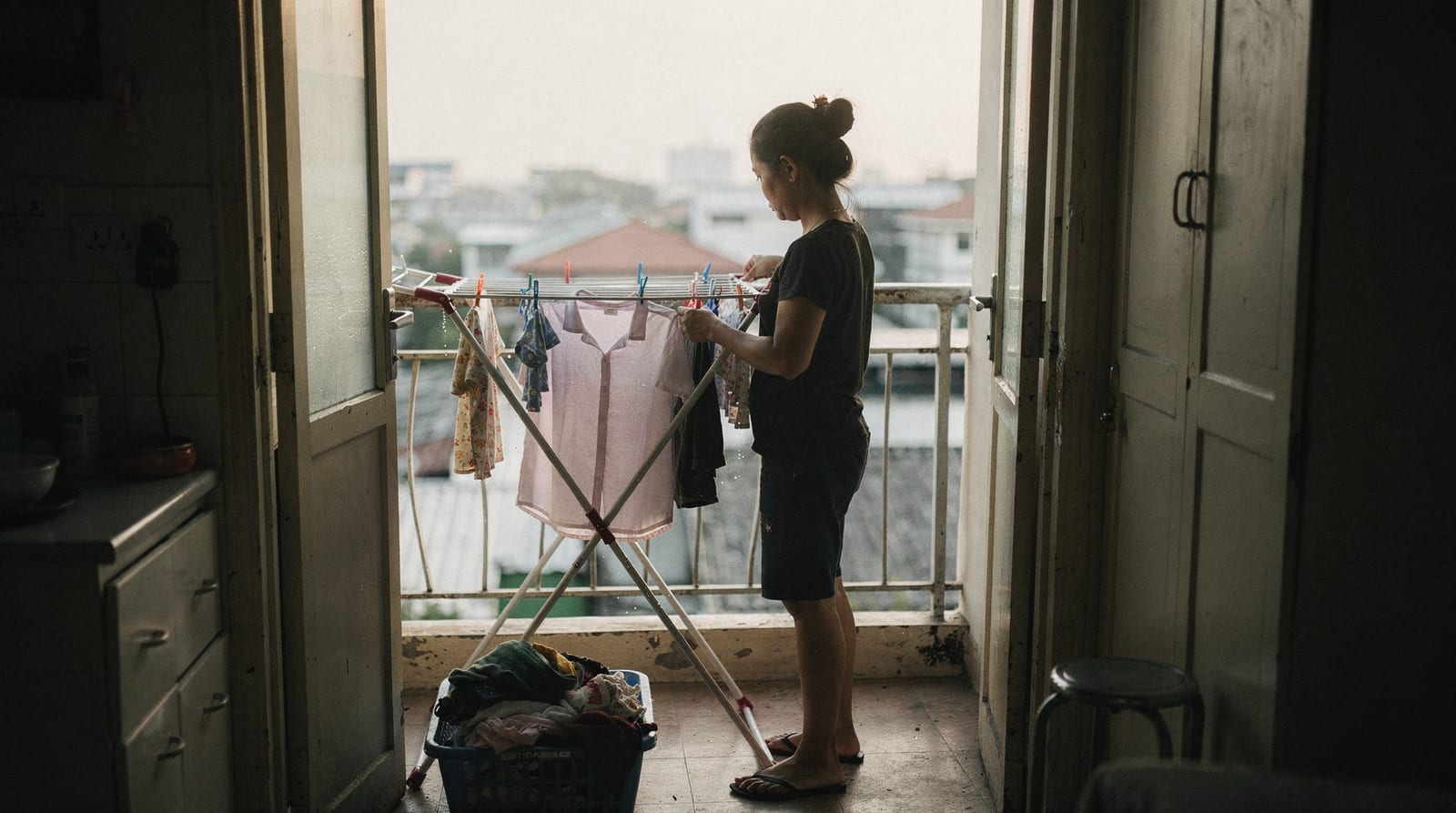
- A genuine private room. Not a converted storeroom, not a shared space. A live-in worker needs somewhere with a door that is hers. In a condo, this often rules live-in out; in a villa or larger home, it is straightforward.
- Meals. Decide what you provide and budget for it as a real cost. Vague arrangements about food are a frequent source of friction.
- Off-hours boundaries. Because she lives where she works, the rest day and daily off-hours need to be explicit and respected. Turnover in Bangkok tracks rest-day reliability more closely than salary.
- Privacy, yours and hers. Another adult living in your home is the biggest non-financial cost of the live-in model. For some households that is a comfortable trade; for others it is the dealbreaker.
Who each arrangement suits
Strip away the salary noise and it comes down to three questions: how much space you have, how much cover you need, and how much privacy you are willing to trade.
- Choose a part-time day maid if you live in a condo or smaller home, your needs are predictable and daytime, your budget is tight or variable, and you value keeping the household to yourself.
- Choose a full-time day maid (live-out) if you need substantial daily help but either lack a spare room or prefer your evenings private. This is the most under-rated middle option.
- Choose a live-in maid if you have a genuine private room to offer and you need cover across the day — young children, an elderly relative, long or irregular working hours, or a larger home that needs continuous attention.
Whichever you choose, the two non-negotiables are the same: an MR 15-compliant written contract and a lawful wage at or above the ฿400/day Bangkok minimum. If you are starting from scratch, our complete 2026 guide to hiring a maid in Thailand walks through cost, contract, work permit, and the agency-vs-direct decision in order.
Frequently asked questions
Is a live-in maid cheaper than a day maid in Bangkok?
Does the 400 baht/day minimum wage apply to a domestic worker in Bangkok?
Do I owe a live-in maid a day off and paid holidays?
Can I count the room and food as part of a live-in maid's wage?
Which suits me — live-in or day?
Primary sources
- Ministerial Regulation No. 15 (B.E. 2567 / 2024), issued under the Labour Protection Act B.E. 2541 (1998) — DLPW Legal Division; ILO summary of the 2024 domestic-work regulations
- Domestic-worker entitlements (rest day, holidays, leave, sick days, working hours, deductions, termination) — ILO MR 15 employer factsheet (June 2025); Tilleke & Gibbins
- Bangkok minimum wage 400 baht/day — Thai Ministry of Labour, Wage Committee Notification No. 14, effective 1 July 2025
- Market salary ranges — public Bangkok agency and expat listings, triangulated; labelled estimates only, no government survey exists
Keep reading
How to hire a maid in Thailand: the 2026 guide
Two facts decide a Thai maid hire: who you can legally employ (Thai needs no permit; foreign workers only via the MOU channel with Myanmar, Laos, Cambodia or Vietnam; a Filipino household maid is not lawful) and the two non-negotiable documents — an MR 15 contract and, for migrants, a work permit. Budget a live-in Bangkok maid at roughly 15,000–25,000 baht/month all-in.
The true cost of hiring a maid in Thailand
The full cost stack to hire a maid in Bangkok: salary (advertised at roughly 12,000–20,000 baht/month, statutory floor 400 baht/day), MOU work-permit fees of about 3,700–4,200 baht paid by the employer, food and accommodation in kind for live-in, and a one-off agency placement fee. Permit costs verified; salary and agency figures labelled estimates.
Filipino vs Thai vs Burmese maid in Thailand — the honest comparison
Legal reality first: a Filipino cannot be lawfully hired as a maid by a private Thai household — Thailand admits foreign domestic labour only via the MOU with Myanmar, Laos, Cambodia and Vietnam. A Thai national needs no permit. Market pay runs Filipino above Thai above Burmese, driven by English, but exact baht gaps are anecdotal.