Restricted occupations for foreigners in Thailand: the 40 jobs, explained
Thailand reserves 40 occupations against foreign workers: 27 absolutely prohibited (List 1) and 13 conditional (Lists 2 to 4), under the Royal Decree B.E. 2560 (2017). Domestic work is not on any list. The real barrier to a foreign maid is the nationality and MOU work-permit framework, not occupational prohibition.

The bullet answer.
- Thailand restricts 40 occupations for foreigners: 27 absolutely prohibited (List 1) and 13 conditionally restricted (Lists 2–4).
- The legal basis is the Royal Decree on Managing the Work of Aliens B.E. 2560 (2017), with the four-list structure issued in B.E. 2561 (2018).
- Domestic and household work is not on any restricted list. It is not a job reserved for Thais.
- The real barrier for a foreign maid is the nationality and MOU work-permit framework, not occupational prohibition. Only Myanmar, Lao, Cambodian and Vietnamese nationals can be legally hired as domestic workers.
- The old figure of “39” is from the superseded 1979 Working of Aliens Act. Ignore it.
How many occupations are restricted — and under which law
As of June 2026, Thailand restricts 40 occupations for foreign workers. They are split across four lists: 27 absolutely prohibited, and 13 that are conditional.
The controlling law is the Royal Decree (Emergency Decree) on Managing the Work of Aliens B.E. 2560 (2017), as amended by Decree No. 2 B.E. 2561 (2018). The Department of Employment then issued the restricted-occupation notification in a four-list structure dated B.E. 2561 (2018), refined around April 2020.
One number you will still see on older expat sites is “39 restricted occupations.” That figure belongs to the repealed 1979 Working of Aliens Act. Under the current decree the count is 40. We also reject the “20-occupation / 3 February 2022” claim that floats around a handful of low-quality pages: no authoritative source supports it.
Source: Royal Decree on Managing the Work of Aliens B.E. 2560 (2017), as amended by Decree No. 2 B.E. 2561 (2018); Department of Employment restricted-occupation notification (four-list structure, B.E. 2561). See the thailand.go.th official guide and the Bangkok Post special report.
The four lists, at a glance
The cleanest way to read the restriction is by list. List 1 is the hard wall; Lists 2 to 4 are conditional, each with a different condition attached.
| List | Count | Status | What it covers |
|---|---|---|---|
| List 1 | 27 | Absolutely prohibited | General manual labour; driving; retail and street vending; hairdressing and beauty; Thai massage; wood carving; tour-guiding; clerical and secretarial work, among others. |
| List 2 | 3 | Allowed only under an international agreement | Accountancy; civil engineering; architecture. |
| List 3 | 8 | Skilled / semi-skilled, with an employer | Agriculture; masonry, carpentry and construction; mattress-making; knife-making; shoe-making; hat-making; garment-making; pottery and ceramics. |
| List 4 | 2 | Under MOU / G2G, with an employer | Generic “labour”; shop-front sales. |
| Total | 40 | 27 prohibited + 13 conditional | — |
Source: Department of Employment restricted-occupation notification under the Royal Decree B.E. 2560; structure dated B.E. 2561 (2018), refined ~April 2020 (B.E. 2563). Cross-checked against The Nation and Acclime Thailand.
The distinction that trips people up. List 1 is an absolute bar: a foreigner cannot do those jobs regardless of qualifications or work permit. Lists 2 to 4 are not bans. They are conditional permissions: a foreigner can do them if the specific condition is met (an international agreement, a qualifying employer, or the MOU channel). Most online summaries blur the two and call all 40 “banned.” They are not.
List 1: the 27 absolutely prohibited occupations
List 1 reserves 27 occupations for Thai nationals only. No work permit can open them to a foreigner. The category was built to protect lower-skilled and culturally specific Thai trades. The headline examples that secondary sources consistently confirm are:
- General manual / unskilled labour
- Driving (motor vehicles and non-mechanically-powered carriers)
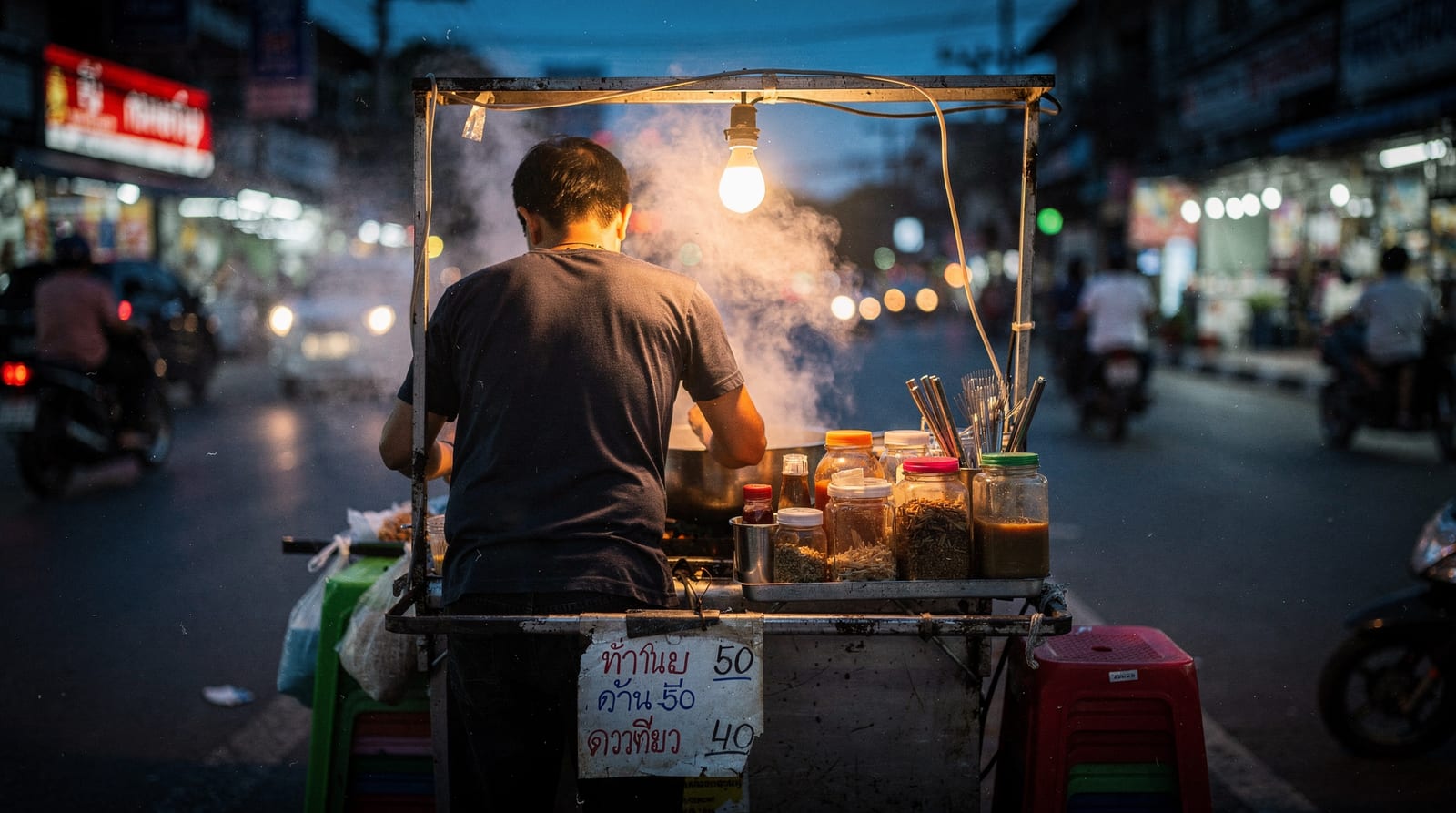
- Retail sales and street vending
- Hairdressing, barbering and beauty work
- Thai massage
- Wood carving
- Tour-guiding and travel organisation
- Clerical and secretarial work
That is eight of the 27; the remainder cover further traditional crafts and protected trades.
The thing to take from List 1 for our purposes: domestic work is not on it. Neither cleaning, nor cooking, nor childcare, nor elderly care appears anywhere in the absolutely-prohibited list.
Lists 2–4: the 13 conditional occupations
The remaining 13 are not closed to foreigners. Each list attaches a condition:
- List 2 (3 occupations) — accountancy, civil engineering and architecture are open only under an international agreement. The relevant route here is the ASEAN Mutual Recognition framework for professionals.
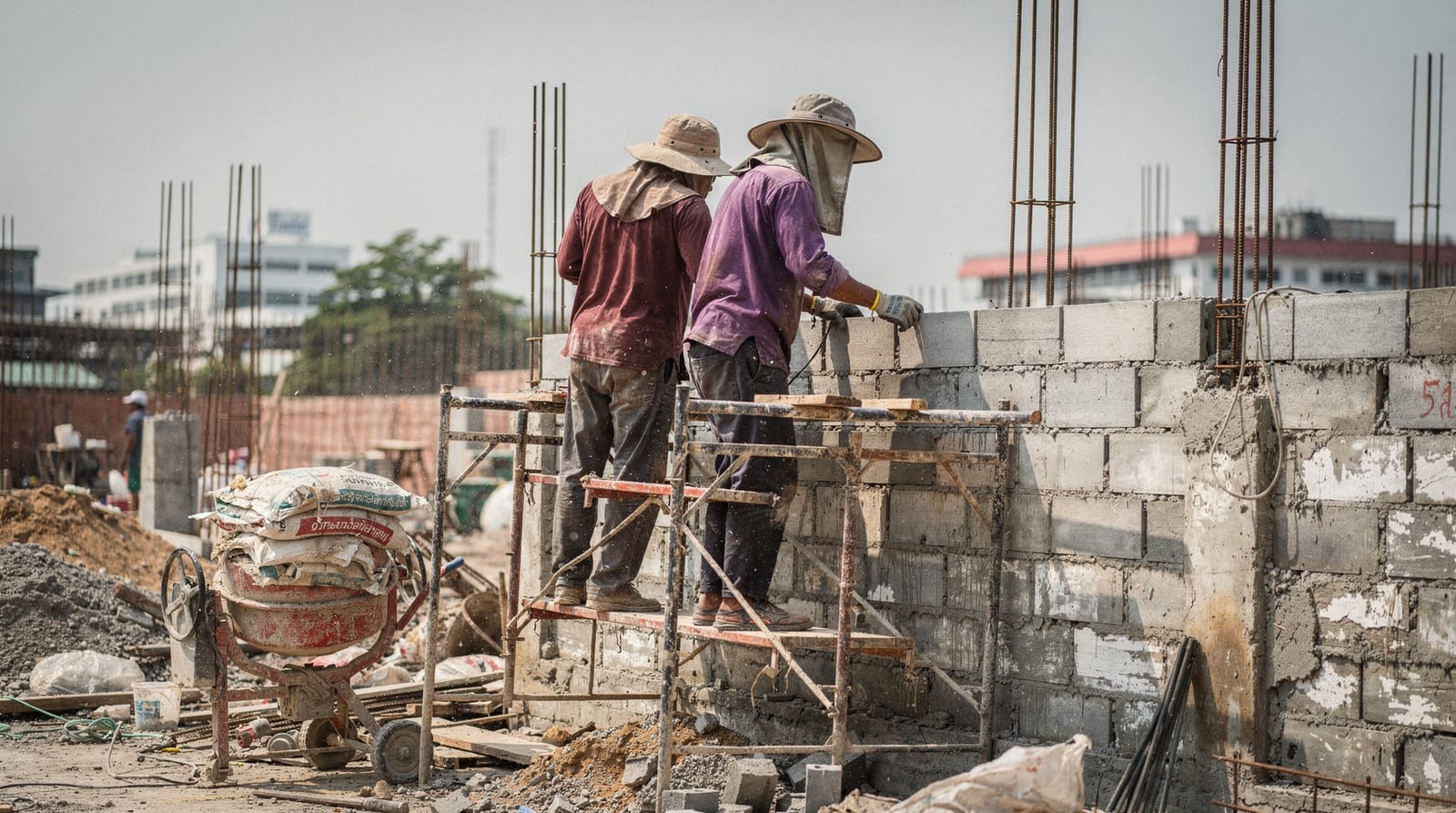
- List 3 (8 occupations) — skilled and semi-skilled trades (agriculture, construction, several traditional manufacturing crafts) are open to a foreigner working for a qualifying employer.
- List 4 (2 occupations) — generic “labour” and shop-front sales are open only through the MOU / G2G channel, with an employer.
List 4 is where the domestic-worker question actually lives, even though “housework” is not named: the MOU channel that List 4 references is the same legal pipeline that lets Myanmar, Lao, Cambodian and Vietnamese nationals work as maids and carers.
So can a foreigner work as a maid in Thailand?
This is the question most readers arrive with, and the answer has two layers that get confused constantly.
Layer one: housework is not a prohibited occupation. Do not let anyone tell you that “maid work is reserved for Thais.” It is not on List 1, and it is not on Lists 2 to 4. Cabinet resolutions explicitly permit MOU-nationality workers to do domestic work. The occupational-prohibition argument simply does not apply to housework.
Layer two: the real barrier is nationality plus the work-permit framework. Thailand limits low-skilled and domestic foreign labour to four MOU-partner nationalities: Myanmar, Lao PDR, Cambodia and Vietnam. If you hold one of those passports, you can be hired as a domestic worker through the MOU process. If you hold any other passport — Western, Filipino, Indian, anything outside the four — there is no lawful low-skilled channel for you to work as a maid, even though the occupation itself is not banned.
The honest summary in one line. A foreigner cannot usually work as a maid in Thailand — but not because housework is illegal for foreigners. It is because only four nationalities have a legal low-skilled work-permit route, and everyone else has none.
For the Filipino case specifically, the answer is no on both sides of the border: Thailand has no MOU with the Philippines, and the Philippine government bans direct hire of household-service workers to Thailand. We cover that in detail in Can a Filipino legally work as a maid in Thailand?
The MOU channel — the only legal route for a foreign maid
For Myanmar, Lao, Cambodian and Vietnamese nationals, the legal pathway is the MOU (Memorandum of Understanding) / G2G labour-import process. It is the only lawful way for a foreign domestic worker to hold a job in a Thai household, and the mechanics are the same whether the placement is a private home or a factory.
In outline, the employer files a demand letter with the provincial employment office, a name list comes from the origin-country labour ministry, the worker enters through a designated checkpoint, attends a one-day orientation, and is issued a work permit. The permit runs two years, renewable once, with a four-year maximum before a cooling-off period. The employer pays the statutory fees; the worker should be charged only for a narrow set of fixed government costs.
We walk through every stage, the real costs, and the broker traps in the MOU process explainer for Myanmar and Lao workers.
Prohibited vs. conditional vs. permitted-via-MOU
Putting the three categories side by side makes the domestic-work answer obvious:
| Category | Example work | Can a foreigner do it? | Condition |
|---|---|---|---|
| Absolutely prohibited (List 1) | Driving, hairdressing, Thai massage, retail vending, tour-guiding | No | None — reserved for Thai nationals |
| Conditional (Lists 2–4) | Accountancy, construction, generic labour, shop-front sales | Yes, if condition met | International agreement, qualifying employer, or MOU channel |
| Permitted via MOU | Domestic / household work (maid, cook, carer, driver-for-household) | Yes — for 4 nationalities only | Myanmar, Lao, Cambodian or Vietnamese national, hired through the MOU process |
Source: Royal Decree B.E. 2560 (2017) restricted-occupation lists; Cabinet resolutions permitting MOU-nationality domestic work. Domestic work appears on no prohibited or conditional list. See thailand.go.th.
What happens if the rules are broken
Working in a reserved occupation, or working with no permit at all, carries real penalties — though they are lower today than they were when the 2017 decree first landed.
- Foreigner working without a permit: a fine of THB 5,000–50,000 plus deportation, with no prison term (Section 101). The old figures of THB 2,000–100,000 and up to five years in prison were the 2017 originals and were softened by the 2018 amendment.
- Employer, first offence: THB 10,000–100,000 per worker for hiring a foreigner without a permit (Section 102, first paragraph).
- Employer, repeat offence: up to one year in prison and/or THB 50,000–200,000 per worker, plus a three-year ban on hiring foreigners (Section 102, second paragraph).
You will still see the figure “up to THB 800,000 per worker” quoted on many expat sites. That was the superseded 2017 penalty for hiring a foreigner specifically into a Thai-only restricted occupation; it was lowered by the 28 March 2018 amendment and is not the current generic no-permit penalty. Do not rely on it.
Source: Royal Decree on Managing the Work of Aliens B.E. 2560 (2017), as amended by Decree No. 2 B.E. 2561 (2018), ss. 101 and 102 (current figures). See thailand.go.th and LawPlus on the 2018 amendment.
Once legally hired, the labour-rights floor still applies
A point employers miss: the restricted-occupation rules and the MOU framework govern whether a foreigner can work. They say nothing about how that worker must be treated once hired. That is a separate body of law.
Since 30 April 2024, Ministerial Regulation No. 15 (B.E. 2567) extends minimum wage, a written contract, a paid weekly rest day, paid public holidays, paid sick leave and working-hour limits to domestic workers — Thai and migrant alike. So a lawfully hired Burmese maid in Bangkok is entitled to the same provincial minimum wage (currently ฿400/day in Bangkok) as a Thai one. The full breakdown is in our MR 15 explainer.
Frequently asked questions
How many occupations are restricted for foreigners in Thailand?
Can a foreigner work as a maid in Thailand?
What are the 27 absolutely prohibited occupations?
Is housework a prohibited occupation in Thailand?
What is the penalty for a foreigner working without a permit?
Primary sources
- Royal Thai Government — restricted occupations for foreigners (official guide)
- Royal Thai Government — working penalties for foreigners (official guide)
- Royal Decree (Emergency Decree) on Managing the Work of Aliens B.E. 2560 (2017), as amended by Decree No. 2 B.E. 2561 (2018) — ss. 101, 102
- Department of Employment restricted-occupation notification, four-list structure B.E. 2561 (2018)
- Bangkok Post — special report on restricted occupations
- The Nation — restricted-occupations report
- Acclime Thailand — restricted jobs guide
- LawPlus — the 2018 amendment to the foreign-worker decree
Keep reading
The MOU process for Myanmar, Lao, Cambodian, and Vietnamese workers
The MOU channel is the only legal route to hire a Burmese, Lao, Cambodian or Vietnamese domestic worker in Thailand. It runs in five stages through the Department of Employment. An employer who deals directly pays about 3,700 to 4,200 baht per worker in official fees. By law the employer pays, not the worker.
Can a Filipino legally work as a maid in Thailand?
A Filipino cannot be lawfully hired by a private Thai household as a maid. Thailand admits domestic foreign labour only through MOUs with Myanmar, Laos, Cambodia and Vietnam, and the Philippines has none. The Philippine side also bans direct hiring of domestic workers. The common visa workarounds are illegal.
Ministerial Regulation No. 15 (B.E. 2567), explained
Ministerial Regulation No. 15 (B.E. 2567) took effect 30 April 2024 under the Labour Protection Act B.E. 2541. It brought Thailand's domestic workers under minimum wage, a written contract, paid sick leave, a weekly rest day and paid public holidays. It did not grant social security or full overtime and severance rights.