What a work permit actually costs for a domestic worker in Thailand (2026)
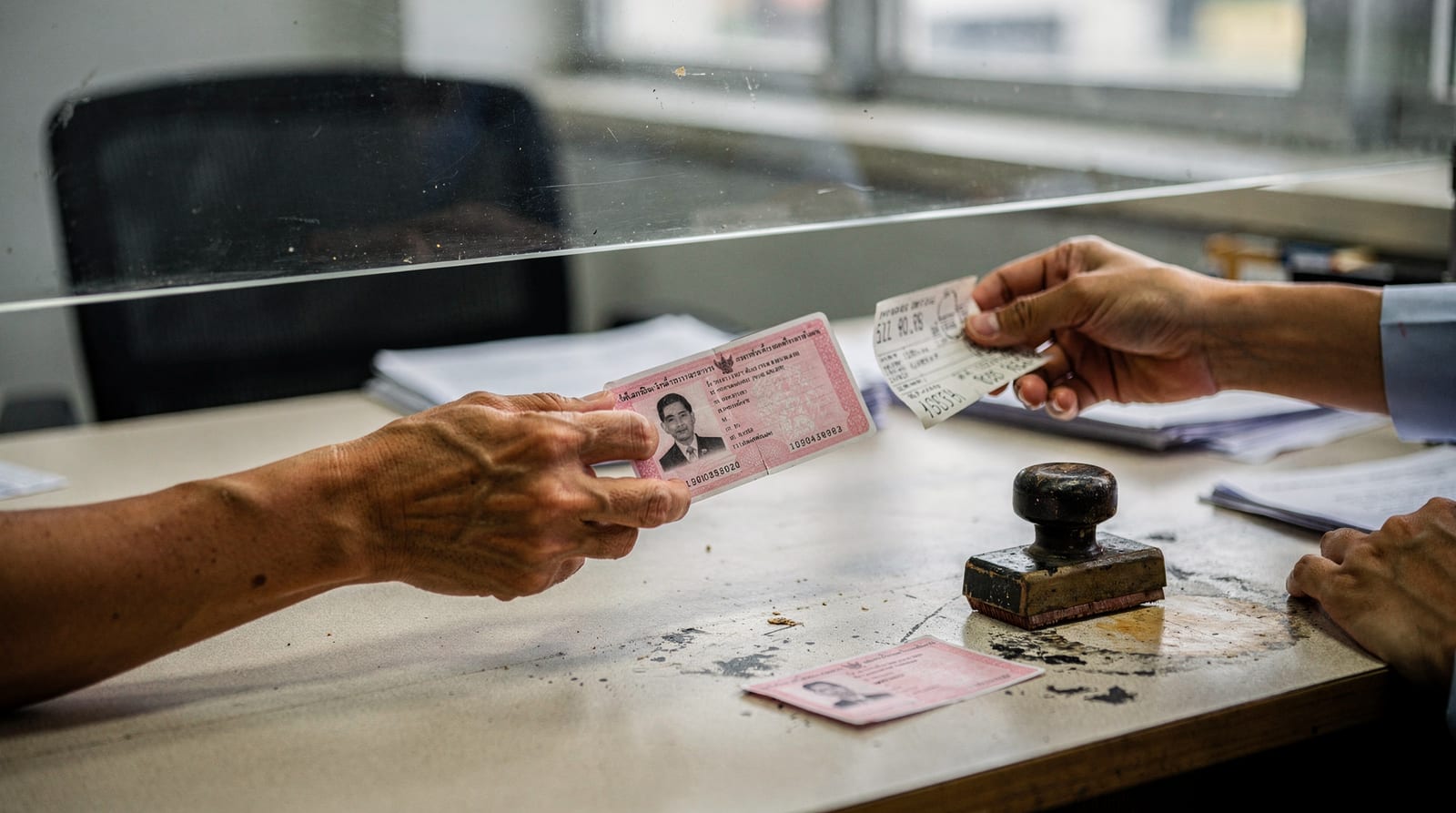
The official cost stack for a direct-employer MOU domestic-worker permit is roughly ฿3,700 to ฿4,200 per worker: visa, permission-to-stay, work permit, Pink Card, health insurance and medical check. The employer pays by law. In the Myanmar corridor workers pay brokers USD 465 to 1,045, four to nine times the legal cap.

The bullet answer.
- For a direct-employer MOU hire after the October 2023 fee cut, the official cost components total roughly ฿3,700–฿4,200 per worker.
- The components: visa ฿500, permission-to-stay ฿500, work permit ~฿1,450, Pink Card ฿60, health insurance ฿990 or ฿1,600, medical check ~฿500.
- The employer pays. A worker may legally be charged only for passport, medical check, and the work-permit fee.
- Charging a worker beyond that is prohibited under Section 49 of the Royal Ordinance B.E. 2560 — penalty up to six months and/or a fine of twice the sum collected.
- Real broker fees in the Myanmar corridor: USD 465–1,045, mean ~USD 730 — four to nine times the legal cap.
The number almost nobody writes down
Most guides to hiring a foreign maid in Thailand quote one figure — usually the work-permit fee alone — and stop. That number is real, but it is not what the hire costs. A work permit is one line in a stack of six government-fixed fees that move together every permit cycle.
This page does the total-cost math, line by line, with each fee tagged to who is legally required to pay it. Throughout, the figures are the official rates for a direct-employer MOU hire after the October 2023 fee cut. The MOU (Memorandum of Understanding) framework is the only legal channel for hiring a domestic worker from Myanmar, Laos, Cambodia, or Vietnam; if you want the step-by-step of that process, read our MOU process explainer.
Quotable. The legal cost of a domestic-worker permit and the price actually paid for one are two different numbers. The first is about ฿4,000 and the law puts it on the employer. The second, in the Myanmar corridor, averages about USD 730 and lands on the worker.
The official cost stack, line by line
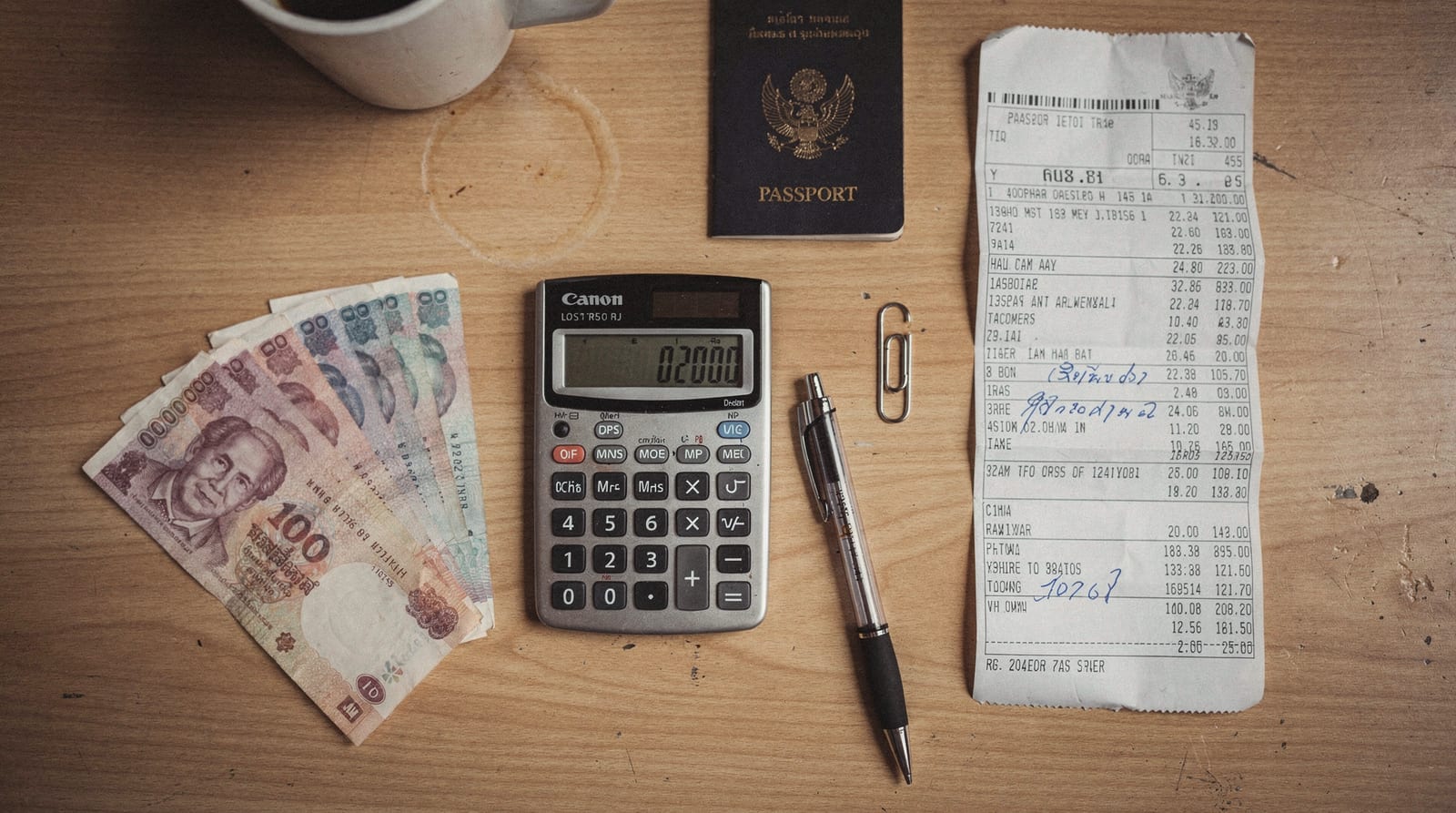
Each row below is one government-fixed fee in a direct-employer MOU hire (no broker mark-up). The third column is the one most guides leave out: who the law requires to bear that cost.
| Item | Official cost | Who legally pays |
|---|---|---|
| Visa | ฿500 | Employer (worker may be charged this as a fixed govt fee) |
| Permission to stay | ฿500 | Employer |
| Work permit | ~฿1,450 | Employer (chargeable to worker only at the fixed rate) |
| Pink Card | ฿60 | Employer |
| Health insurance | ฿990 or ฿1,600 | Employer |
| Medical check | ~฿500 | Employer (chargeable to worker at fixed rate) |
| Total per worker | ~฿3,700–฿4,200 | Employer bears recruitment/service costs by law |
Cost components and totals: post-October-2023 direct-employer MOU fee set, per maidthailand.com VERIFIED-FACTS-2026-06 (Topic 6, citing the IOM Thailand Labour Migration Profile, March 2025, and a DOE-aligned employer guide). The current fee schedule is flagged for re-confirmation against an official 2026 fee notification. Who-legally-pays: Royal Ordinance on the Management of Employment of Foreign Workers B.E. 2560 (2017), Section 49.
The ฿3,700–฿4,200 range reflects two real variables. Health insurance is sold in different coverage windows (the ฿990 and ฿1,600 figures), and the medical check and work-permit fee are quoted as approximate because they vary slightly by province and provider. Everything else is fixed.
Who pays — and what the law actually says
This is the part the brokerage industry would rather you not read clearly, so here it is plainly.
The employer is legally required to bear recruitment and service costs. A migrant worker may be charged only for three things: their passport, their medical check, and the work-permit fee — and only at the fixed government rate. Every other cost in a hire is the employer's by law.
Demanding money or property from a migrant worker beyond those fixed fees is prohibited. The controlling provision is Section 49 of the Royal Ordinance on the Management of Employment of Foreign Workers B.E. 2560 (2017), as amended. The penalty is up to six months' imprisonment and/or a fine equal to twice the sum unlawfully collected.
Quotable. Under Section 49 of the Royal Ordinance B.E. 2560, a worker can be charged for a passport, a medical check, and the work-permit fee — nothing else. Charging more is not a grey area. It is an offence carrying up to six months in prison and a fine of twice the amount taken.
The gap between the law and the bill
The honest reality is that the official cost and the cost workers actually pay are not the same number, and the distance between them is the whole story of this market.
In the Myanmar–Thailand corridor, documented broker fees run USD 465–1,045, mean about USD 730. That is roughly four to nine times the official cap. The mechanism is broker mark-up layered on top of the fixed fees, plus illegal fee-shifting onto the worker — frequently recovered through wage deductions over the first months of employment. Some Thai employers contribute to the problem directly by selling their demand letters into this chain.
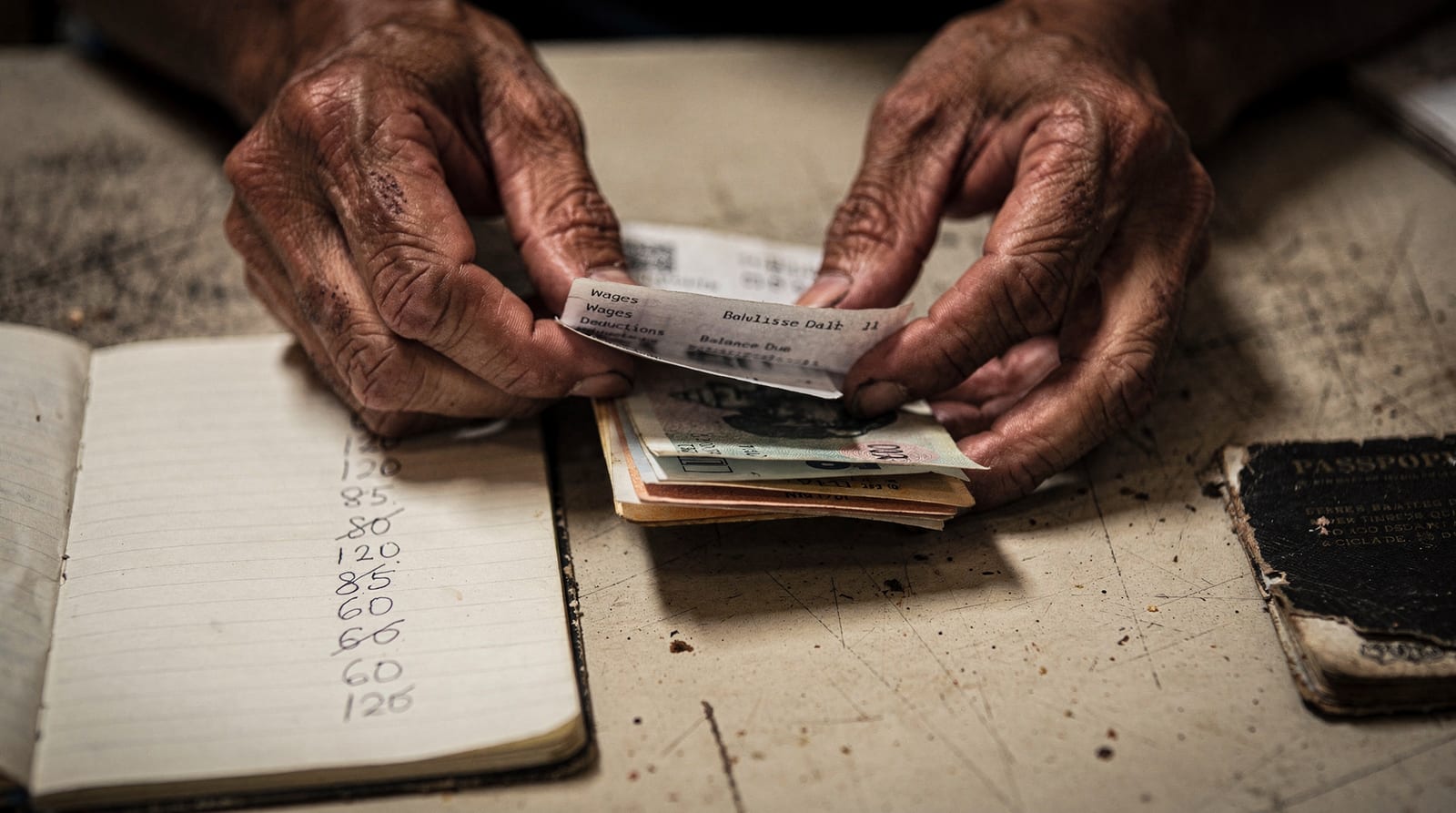
We present this gap honestly because the people most harmed by it are the workers, and a page that quotes only the ฿4,000 figure leaves them unprotected. If a worker is being charged thousands of dollars for a job, the law has already been broken before the first day of work.
Broker-fee range and mean: maidthailand.com VERIFIED-FACTS-2026-06 (Topic 6), citing the Five Corridors Project (Myanmar–Thailand) and HaRDstories reporting on Myanmar migrants and Thai work-permit brokers; high confidence for Myanmar, medium for the Cambodia/Lao corridors, which run cheaper.
The e-Work Permit: the channel changed in 2025
One process change matters to anyone budgeting a hire in 2026. The e-Work Permit portal at eworkpermit.doe.go.th became the mandatory channel on 13 October 2025. All new applications, renewals, cancellations, amendments, and registrations — including for domestic workers — now flow through it, and the ThaiID app is required.
Paper filing has not vanished, but it is now an exception. The current manual grace deadline runs to 28 July 2026, and applies only under a technical-fault exception. That deadline has already been pushed back three times, so it is worth checking the live status before you rely on a paper route.
e-Work Permit mandatory date and paper grace deadline: maidthailand.com VERIFIED-FACTS-2026-06 (Topic 7), citing Fragomen, Nairametrics (29 April 2026), Erickson Immigration Group, and the Ministry of Labour.
Does the cost restart? The renewal math
Yes. The fee stack is a recurring cost, not a one-time one. The work permit and its associated fees restart each permit cycle, which runs one to two years.
The cycle dates matter for planning. Under the Cabinet Resolution of 24 September 2024, permits for the four MOU nationalities were extended to 13 February 2027 and are renewable to 13 February 2029. Budget the cost stack again at each renewal, and confirm — in writing — that the renewal fees are not being deducted from the worker's wages.
MOU permit-cycle extension dates: maidthailand.com VERIFIED-FACTS-2026-06 (Topic 7), Cabinet Resolution 24 September 2024.
How to use this number when you hire
The cost stack above is a verification tool, not just a budget. When an agency hands you a bill, lay it next to this table.
- Ask for the itemised fee breakdown. Each official line should be recognisable against the table above.
- Anything beyond the official lines is a service fee. It can be legitimate — but it is the employer's cost, never the worker's.
- Get it in writing that no fee will be deducted from the worker's wages. This is the single most important clause in the contract.
- If the agency cannot or will not itemise, that is your answer. Find another agency.
- Watch for the scam red flags — passport retention and "training fee" repayment schedules are the two most common.
For the full hiring sequence around this cost, see our 2026 guide to hiring a maid in Thailand.
Frequently asked questions
How much does a work permit cost for a domestic worker in Thailand?
Who is legally required to pay the work-permit and recruitment costs?
Why do Myanmar workers pay so much more than the legal cost?
Is the e-Work Permit system now mandatory?
Does the official fee restart at renewal?
Primary sources
- Royal Ordinance / Emergency Decree on the Management of Employment of Foreign Workers B.E. 2560 (2017), as amended by Decree No. 2 B.E. 2561 (2018) — Section 49 (recruitment-fee prohibition)
- IOM Thailand Labour Migration Profile, March 2025 (MOU cost components)
- Five Corridors Project — Myanmar–Thailand corridor (broker-fee reality)
- HaRDstories — reporting on Myanmar migrants and Thai work-permit brokers
- e-Work Permit portal: eworkpermit.doe.go.th; Ministry of Labour (mandatory 13 October 2025; manual grace deadline 28 July 2026)
- Cabinet Resolution, 24 September 2024 (MOU permit-cycle extension to 13 February 2027 / renewable to 13 February 2029)
Keep reading
The MOU process for Myanmar, Lao, Cambodian, and Vietnamese workers
The MOU channel is the only legal route to hire a Burmese, Lao, Cambodian or Vietnamese domestic worker in Thailand. It runs in five stages through the Department of Employment. An employer who deals directly pays about 3,700 to 4,200 baht per worker in official fees. By law the employer pays, not the worker.
Ministerial Regulation No. 15 (B.E. 2567), explained
Ministerial Regulation No. 15 (B.E. 2567) took effect 30 April 2024 under the Labour Protection Act B.E. 2541. It brought Thailand's domestic workers under minimum wage, a written contract, paid sick leave, a weekly rest day and paid public holidays. It did not grant social security or full overtime and severance rights.
Eight broker-scam red flags every domestic worker should know
If a broker holds your passport, charges you a placement fee, tells you to work on a tourist visa, or pays below ฿400 a day in Bangkok, these are illegal under Thai law. Here are the eight warning signs every domestic worker should know, with hotline numbers. maidthailand.com is free for workers and never asks workers for money.