Eight broker-scam red flags every domestic worker should know
If a broker holds your passport, charges you a placement fee, tells you to work on a tourist visa, or pays below ฿400 a day in Bangkok, these are illegal under Thai law. Here are the eight warning signs every domestic worker should know, with hotline numbers. maidthailand.com is free for workers and never asks workers for money.

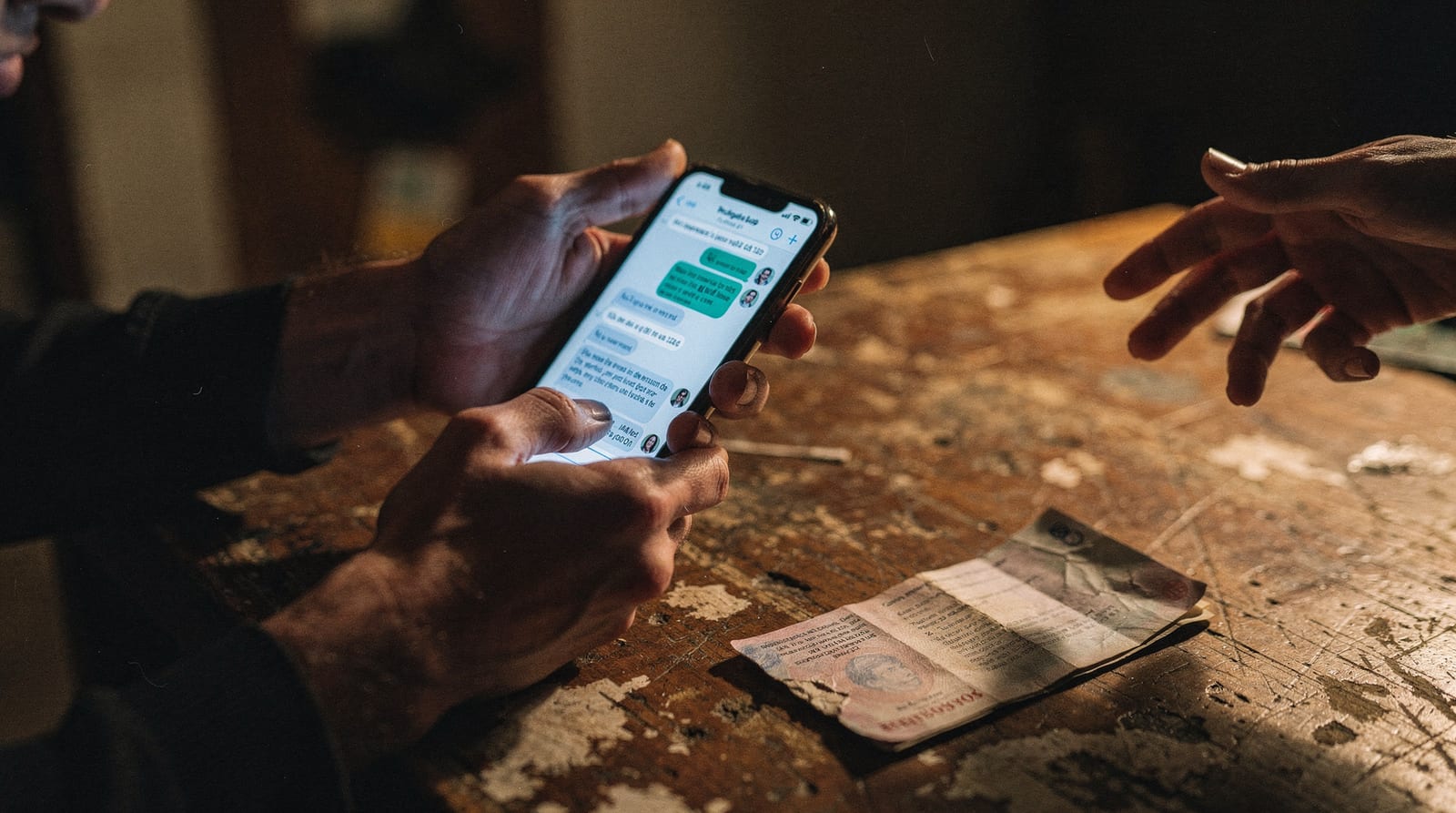
If you are in immediate danger (your passport is being held against your will, you are being prevented from leaving, you are being physically harmed) call 1300 (Thailand Anti-Trafficking hotline, 24/7, translators available) or the MAP Foundation 24-hour hotline +66 81 862 3894.
First, our promise to you
maidthailand.com is free for workers. We never ask workers for money. Anyone who asks you to pay for a job through us is a scam. If anyone tells you to pay us to get a job, they are lying. Report them to a hotline below. You will not be in trouble. They will.
1. The broker wants to hold your passport
This is illegal. You have the right to keep your own passport. If anyone (agency, employer, broker, family member) tells you they are "holding it for safekeeping," refuse, take it back, and contact a hotline below.
Source: Anti-Trafficking in Persons Act B.E. 2551 (2008). Holding a worker's documents to control them is a recognised sign of forced labour.
2. You are being told to work on a tourist visa
Working on a tourist visa is illegal. The penalty falls partly on the employer and partly on you. The only legal route for a Burmese, Lao, Cambodian, or Vietnamese domestic worker is the MOU work-permit process, where you arrive with a proper visa and work permit before you start. If the broker says "you can start now and we will fix the visa later," walk away.
Filipino workers have a separate legal question, because Thailand's low-skilled MOU route does not include the Philippines. If you are Filipino, read Can a Filipino legally work as a maid in Thailand? before you agree to anything, and ask the MWO at the Philippine Embassy (number below).
Source: Royal Ordinance on the Management of Employment of Foreign Workers B.E. 2560 (2017); the MOU route is the only legal channel for low-skilled foreign domestic labour. See MR 15 and our MOU explainer for detail.
3. The broker wants a placement fee, or is taking one out of your wages
This is the most common scam against workers, so read it slowly. Paying for a job is not your cost. The cost of recruiting you is the employer's cost. You should only ever pay for three small, fixed things:
- your own passport,
- your medical check,
- your fixed government work-permit fees.
That is all. A legal MOU placement costs the employer only about ฿3,700 to ฿4,200 in government fees per worker, and the employer is the one who pays the recruitment side. If a broker asks you for a "placement fee," a "training fee," a "deposit," or money to "guarantee" the job, that is illegal. Taking these fees out of your wages is illegal too.
The honest reality: many workers are charged far more than the law allows. On the Myanmar–Thailand route, workers have been found paying roughly USD 465 to 1,045 to brokers, many times the legal cost. That is the broker breaking the law, not you. Knowing the rule is your first protection. If you see deductions, document them (photograph the payslip, save the bank transfer) and call a hotline.
Source: Royal Ordinance on the Management of Employment of Foreign Workers B.E. 2560 (2017), Section 49, which bars demanding money or property from a migrant worker beyond the fixed government fees. Penalty: up to 6 months imprisonment and/or a fine equal to twice the sum unlawfully collected. Cost figures: Five Corridors Project and ILO research on the Myanmar–Thailand corridor.
4. You do not have a written contract
Under MR 15 (2024), every domestic worker should have a written employment contract in a language they read, before work begins. If you have no contract, or only a Thai-language contract you cannot read, ask for one. If it is refused, that is a major red flag.
Source: Ministerial Regulation No. 15 (B.E. 2567), effective 30 April 2024. See your rights as a domestic worker for the full list.
5. Your wage is below the provincial minimum
Since 30 April 2024, the minimum wage applies to domestic workers. There is no special lower rate for maids. In Bangkok and Phuket, the minimum is ฿400 a day since 1 July 2025, which is about ฿8,800 a month for a normal 22-working-day month. "Room and board" cannot be used to bring your cash wage below the provincial minimum. The room and food are on top of your wage, not a substitute for it.
Source: Wage Committee Notification No. 14, effective 1 July 2025 (Bangkok and Phuket ฿400/day); minimum wage applies to domestic workers under MR 15 (30 April 2024). National range is about ฿337 to ฿400/day depending on province.
6. You are not getting a weekly day off
MR 15 requires at least one paid rest day per week, with no more than 6 days between rest days. The employer cannot force you to give it up. If you ever agree to work a rest day or a public holiday, you should be paid extra for it.
Source: Ministerial Regulation No. 15 (B.E. 2567), effective 30 April 2024 (weekly rest day; holiday-work pay).
7. The broker controls all your contact and will not let you speak privately
You should be able to speak privately with anyone: your translator, the embassy, an NGO, your family. If the broker is monitoring or controlling all your communication, that is a sign of control that often comes before serious abuse. Reach out to a hotline.
8. The agency promises something "too good to be true"
If the broker promises a salary far above market without explaining how, "guaranteed" visa approval, or "no paperwork needed," they are lying about the role, the visa, or the legal status. Cross-check the pay against honest market ranges, and check the agency's licence number with the Department of Employment.
Hotlines & help
| Who | What they do | Number / link |
|---|---|---|
| HomeNet Thailand (Bangkok) | Domestic-worker support, legal aid, translators. Thai + English. Mon–Fri. | +66 2 291 4552 |
| MAP Foundation (Chiang Mai / Mae Sot) | Migrant-worker support. Burmese, Shan, Thai. 24-hour hotline. | +66 81 862 3894 |
| MWO-Bangkok | Migrant Workers Office, Philippine Embassy. Tagalog + English. For Filipino workers. | +66 2 259 5139 |
| Anti-Trafficking Hotline | Government 24/7 hotline. Translators available. Confidential. | 1300 (in Thailand) |
| Labour Hotline | Ministry of Labour. Wage disputes, MR 15 enforcement, work-permit issues. | 1694 (in Thailand) |
| IOM Thailand | International Organization for Migration. Migrant Resource Centres across Thailand. | thailand.iom.int |
For a fuller list of NGOs and hotlines by region, see our NGO & hotline directory. For your country's embassy in Thailand, see the embassy directory.
Three things to do today, even if nothing is wrong yet
- Photograph every page of every document (your passport, your visa, your work permit, your contract, your medical card). Send the photos to a family member. If your documents are taken later, you still have proof.
- Save the hotline numbers to your phone right now, with the names "HomeNet," "MAP," "1300," "1694."
- Open a bank account in your own name, not a relative's or the agency's. Your wages should be paid into your own account. This is also a paper trail if anything goes wrong.
Frequently asked questions
Should I pay a fee to get a job through maidthailand.com?
Can a broker hold my passport for safekeeping?
How much can a broker legally charge a migrant worker?
What should a legal maid wage be in Bangkok?
Primary sources
- Royal Ordinance on the Management of Employment of Foreign Workers B.E. 2560 (2017), Section 49 — recruitment-fee prohibition
- Ministerial Regulation No. 15 (B.E. 2567), effective 30 April 2024 — written contract, rest day, holiday-work pay
- Thai Ministry of Labour, Wage Committee Notification No. 14 (effective 1 July 2025)
- Anti-Trafficking in Persons Act B.E. 2551 (2008) — document withholding as a forced-labour indicator
- Five Corridors Project / ILO — Myanmar–Thailand recruitment-cost research
Keep reading
Your rights as a domestic worker in Thailand
Since 30 April 2024, MR 15 gives every maid, nanny, and carer in Thailand — Thai or migrant — at least one paid day off a week, 13 paid public holidays, up to 30 paid sick days, and the provincial minimum wage (฿400 a day in Bangkok). maidthailand.com is free for workers and never asks workers for money.
Migrant worker NGO & hotline directory — who to call in Thailand
A worker-facing directory of the NGOs and government hotlines that help domestic and migrant workers in Thailand: wage disputes, abuse, trafficking, legal aid, and repatriation. It lists phone numbers, emails, and languages for each, with the official source. maidthailand.com is free for workers and never asks workers for money.
Embassy & labour attaché directory for domestic workers in Thailand
Bangkok contacts for Filipino, Burmese, and Lao domestic workers: the Philippine Embassy and Migrant Workers Office, the Myanmar Embassy and labour attaché, the Lao Embassy, plus Thai labour hotlines. Each entry lists address, phone, email, and what it does for you. Your embassy is free and works for you, not your employer or your broker.