Your rights as a domestic worker in Thailand
Since 30 April 2024, MR 15 gives every maid, nanny, and carer in Thailand — Thai or migrant — at least one paid day off a week, 13 paid public holidays, up to 30 paid sick days, and the provincial minimum wage (฿400 a day in Bangkok). maidthailand.com is free for workers and never asks workers for money.


The short answer. Since 30 April 2024, a Thai law called MR 15 protects domestic workers. You get:
- At least one day off every week.
- At least 13 paid public holidays a year.
- 6 paid days off a year, after you work one full year.
- Up to 30 paid sick days a year.
- At least the minimum wage for the province you work in. In Bangkok that is ฿400 a day.
- You must be 15 or older to do this work.
These rights are the same whether you are Thai, Burmese, Lao, Cambodian, or Vietnamese.
First, our promise to you
maidthailand.com is free for workers. We never ask workers for money. Anyone who asks you to pay for a job through us is a scam. If anyone tells you to pay us to get a job, they are lying. Report them here or call a hotline at the bottom of this page. You will not be in trouble. They will.
What is MR 15?
MR 15 is short for Ministerial Regulation No. 15. A ministerial regulation is a rule made by the Minister of Labour under a bigger law, the Labour Protection Act. MR 15 started on 30 April 2024. It replaced an older, weaker rule.
Before MR 15, domestic workers were left out of many basic protections. The new rule changed that. It says a "domestic worker" means a cleaner, a cook, a carer, a driver, or a household guard who works in a home, not a business.
If you clean, cook, look after children, or care for an elderly person in a private home in Thailand, MR 15 protects you. It does not matter which country you come from.
Your rights under MR 15
This table lists what the law gives you. Take a photo of it. Show it to your employer if you need to.
| Your right | What the law says |
|---|---|
| Day off | At least 1 full day off every week. No more than 6 days between rest days. |
| Public holidays | At least 13 paid public holidays a year, including National Labour Day (1 May). |
| Annual leave | At least 6 paid days off a year, after you have worked one full year. |
| Sick leave | Up to 30 paid sick days a year. For 3 sick days in a row, you may be asked for a doctor's note. |
| Personal leave | 3 paid days a year for important personal matters. |
| Minimum age | You must be 15 or older. Workers aged 15–17 cannot do dangerous or night work (10pm–6am). |
| Minimum wage | At least the provincial minimum. In Bangkok and Phuket it is ฿400 a day since 1 July 2025. |
| Wage deductions | Limited by law. Most deductions cannot be more than 10% of your pay, and all deductions together cannot be more than 20% of one payment. |
| Final pay | When the job ends, your last pay must be given within 3 days. |
| Maternity leave | 98 days of maternity leave, up to 45 paid by the employer. You cannot be fired for being pregnant. |
Source: Ministerial Regulation No. 15 (B.E. 2567), effective 30 April 2024, under the Labour Protection Act B.E. 2541; ILO MR 15 factsheet (2025). See the full breakdown in our MR 15 explainer.

How much you must be paid
Since 30 April 2024, the minimum wage applies to domestic workers. There is no special lower rate for maids. You get the rate for the province where you work.
In Bangkok and Phuket, the minimum is ฿400 a day since 1 July 2025. Across Thailand the minimum runs from about ฿337 to ฿400 a day, depending on the province.
"Room and board" does not count as wages. A free room and free food are not a substitute for your cash wage. Your employer must still pay you at least the minimum wage in cash.
Source: Wage Committee Notification No. 14, effective 1 July 2025 (Bangkok ฿400/day); ILO MR 15 factsheet (2025).
You should never pay for a job
This is one of the most common scams against workers, so read it slowly.
Paying for a job is not your cost. Under Thai law, the cost of hiring you is the employer's cost. You should only ever pay for three small, fixed things:
- your own passport,
- your medical check,
- your fixed government work-permit fees.
That is all. If a broker asks for a "placement fee," a "training fee," a "deposit," or money to "guarantee" the job, that is illegal. If they take these fees out of your wages, that is illegal too.
The only money you should ever pay is for your passport, your medical check, and your government work-permit fees. Anyone asking for more is breaking the law.
The honest reality is that many workers are charged far more than the law allows. Studies of the Myanmar–Thailand route have found workers paying many times the legal cost. That is the broker breaking the law — not you. Knowing the rule is your first protection.
Source: Royal Ordinance on the Management of Employment of Foreign Workers B.E. 2560 (2017), Section 49, which bars charging migrant workers beyond fixed government fees; ILO and Five Corridors Project research on the Myanmar–Thailand corridor.
What MR 15 does NOT do — the honest gaps
We will always tell you the truth, even when it is not what you want to hear. MR 15 is a big step forward, but it is not complete. Two gaps matter:
- No full overtime and severance system. Factory and office workers get a full set of overtime and severance rules. Domestic workers do not yet get that full system. The law is honest about this being a remaining gap.
- No main social security. Domestic workers are still left out of Thailand's main Social Security scheme (Section 33). Thai domestic workers can join a voluntary scheme; migrant domestic workers mostly cannot.
We tell you this so no broker can lie to you about it. Your rest day, your holidays, your leave, your sick days, and your minimum wage are real and the law backs them. The gaps above are also real.
Source: ILO MR 15 factsheet (2025), which lists full Labour Protection Act overtime/severance and Social Security Section 33 as remaining gaps for domestic workers.
What to do if your rights are broken
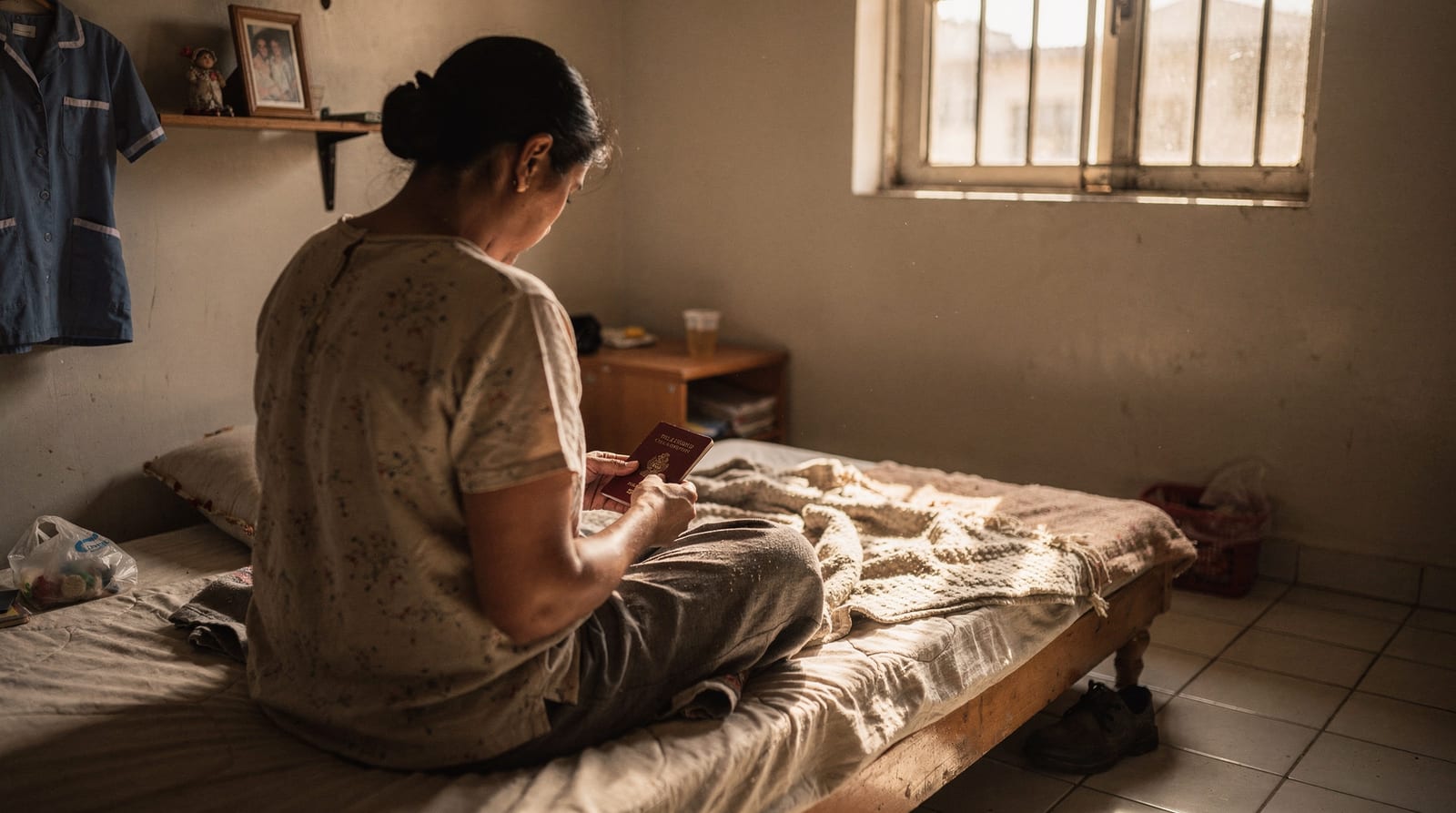
- Keep proof. Take a photo of your contract, your payslips, and any messages. Send the photos to a family member.
- Keep your own documents. Hold your own passport. Nobody has the right to take it from you.
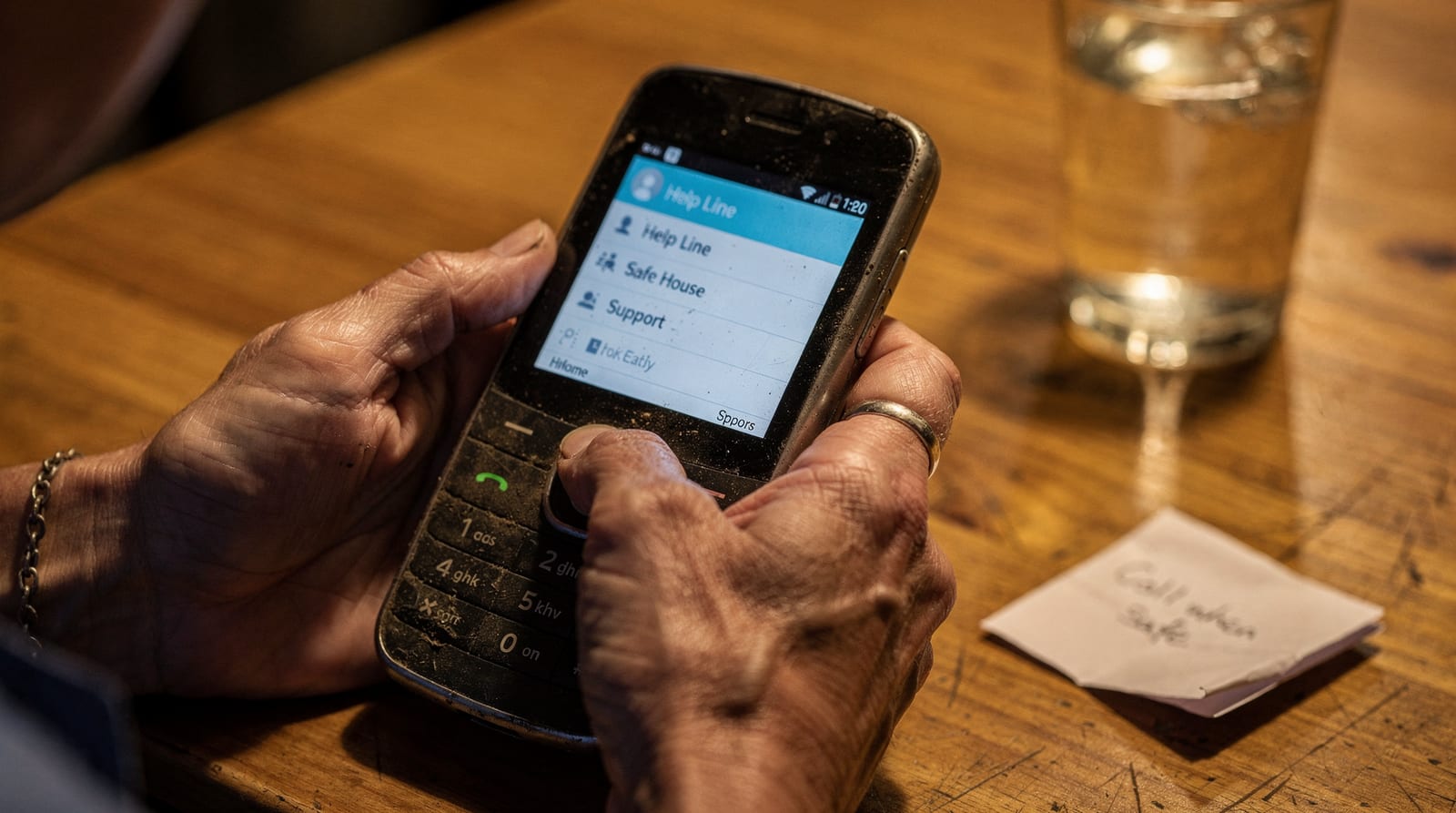
- Call for help. The NGOs and government hotlines below exist to help domestic workers. They are free and many speak your language.
Who to call
| Who | What they do | Number / link |
|---|---|---|
| HomeNet Thailand (Bangkok) | Domestic-worker support, legal aid, translators. Thai + English. Mon–Fri. | +66 2 291 4552 |
| MAP Foundation (Chiang Mai / Mae Sot) | Migrant-worker support. Burmese, Shan, Thai. 24-hour hotline. | +66 81 862 3894 |
| MWO-Bangkok | Migrant Workers Office, Philippine Embassy. Tagalog + English. For Filipino workers. | +66 2 259 5139 |
| Anti-Trafficking Hotline | Government 24/7 hotline. Translators available. Confidential. | 1300 (in Thailand) |
| Labour Hotline | Ministry of Labour. Wage disputes, MR 15 enforcement, work-permit issues. | 1694 (in Thailand) |
| IOM Thailand | International Organization for Migration. Migrant Resource Centres across Thailand. | thailand.iom.int |
For a fuller list of NGOs and embassy contacts in every region, see our NGO & hotline directory.
Frequently asked questions
Do migrant workers have the same rights as Thai workers under MR 15?
What is the minimum wage for a maid in Bangkok?
Should I pay a fee to get a job through maidthailand.com?
Can a broker take money out of my wages for a placement fee?
Does MR 15 give me social security and severance pay like a factory worker?
Primary sources
- Ministerial Regulation No. 15 (B.E. 2567), effective 30 April 2024, under the Labour Protection Act B.E. 2541
- ILO — MR 15 domestic-worker factsheet (2025)
- Thai Ministry of Labour, Wage Committee Notification No. 14 (effective 1 July 2025)
- Royal Ordinance on the Management of Employment of Foreign Workers B.E. 2560 (2017) — recruitment-fee prohibition
- Five Corridors Project / ILO — Myanmar–Thailand recruitment-cost research
Keep reading
Eight broker-scam red flags every domestic worker should know
If a broker holds your passport, charges you a placement fee, tells you to work on a tourist visa, or pays below ฿400 a day in Bangkok, these are illegal under Thai law. Here are the eight warning signs every domestic worker should know, with hotline numbers. maidthailand.com is free for workers and never asks workers for money.
Migrant worker NGO & hotline directory — who to call in Thailand
A worker-facing directory of the NGOs and government hotlines that help domestic and migrant workers in Thailand: wage disputes, abuse, trafficking, legal aid, and repatriation. It lists phone numbers, emails, and languages for each, with the official source. maidthailand.com is free for workers and never asks workers for money.
Embassy & labour attaché directory for domestic workers in Thailand
Bangkok contacts for Filipino, Burmese, and Lao domestic workers: the Philippine Embassy and Migrant Workers Office, the Myanmar Embassy and labour attaché, the Lao Embassy, plus Thai labour hotlines. Each entry lists address, phone, email, and what it does for you. Your embassy is free and works for you, not your employer or your broker.